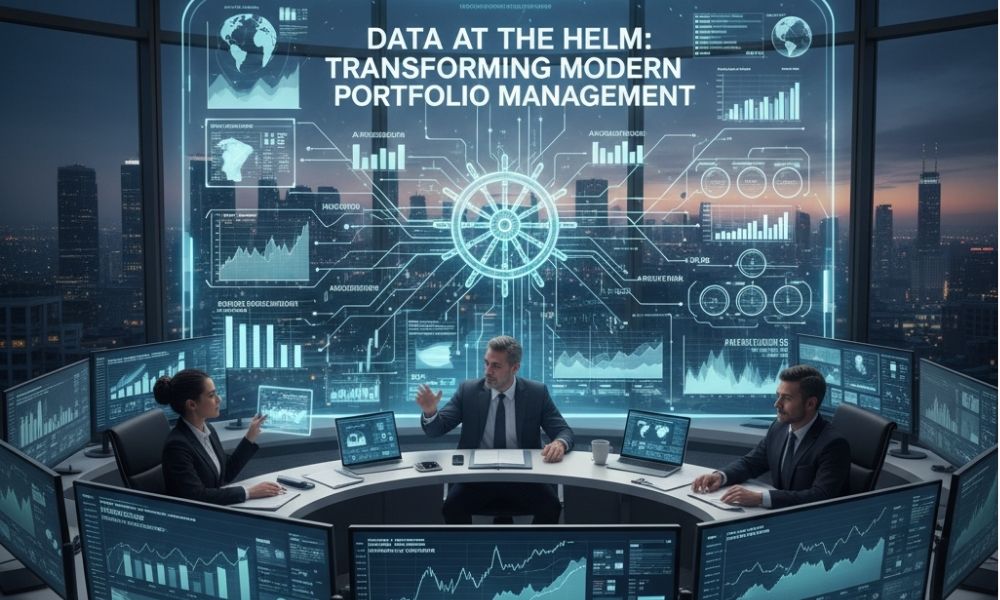
Data at the Helm: Transforming Modern Portfolio Management
 By harryseo716
 As the financial markets grow more complex and interconnected, investors and asset managers are turning to technology and analytics to gain a competitive edge. Leveraging data analytics and the power of portfolio management software from Ridgeline, modern portfolio management is achieving unparalleled precision, agility, and insight. With instantaneous access to massive financial datasets, advanced algorithms, and AI-driven tools, the days of intuition-based decisions are giving way to evidence-backed, real-time portfolio strategies that better manage risk and adapt to changing conditions.
This shift toward data-driven decision-making (DDDM) is not only transforming how portfolios are constructed and adjusted but also enhancing transparency and accountability for investors, stakeholders, and regulatory bodies. For portfolio managers, the ability to analyze real-time data and incorporate predictive analytics allows for more accurate forecasting, stronger risk controls, and ultimately, the opportunity to optimize investor returns in increasingly volatile markets.
Importance of Data-Driven Decision Making
Data-driven decision making gives portfolio managers a significant edge in several key areas:
- Enhance Investment Performance:By parsing through big data, machine learning models can uncover complex correlations and forecast market shifts that are impossible to detect manually. As a result, managers are better equipped to select high-potential assets, exit underperforming positions, and adjust allocations to maximize returns.
- Improve Risk Management:Advanced analytics allow for nuanced risk assessment at the portfolio, sector, and individual security levels. Scenarios can be stress-tested in real time, ensuring investment decisions are resilient in the face of volatility and unforeseen events.
- Optimize Portfolio Allocation:With granular data on market trends and asset correlations, managers can construct portfolios tailored to client objectives and risk appetites.
Tools and Technologies
The modern portfolio manager’s toolbox is filled with cutting-edge technologies:
- Artificial Intelligence (AI) and Machine Learning (ML):These capabilities process immense amounts of structured and unstructured data to predict asset prices, assess sentiment, and automate trading based on predefined parameters.
- Big Data Analytics:With big data frameworks, diverse information streams, from global news to economic indicators to satellite imagery, are integrated for a holistic market view.
- Decision Intelligence Tools:Decision intelligence platforms synthesize inputs from multiple models, enabling portfolio managers to act faster with confidence and clarity.
Challenges and Considerations
While data-driven decision-making offers transformative benefits, it also presents new challenges:
- Data Quality:Insights are only as good as the data they are derived from. Poor-quality, fragmented, or outdated data can lead to misguided decisions and costly errors.
- Data Security:With greater reliance on digital tools comes increased exposure to cybersecurity risks. Protecting sensitive financial information is an ongoing priority.
- Integration Complexity:Linking disparate data sources—each with varying formats and governance protocols—can be technically demanding and resource-intensive.
Solving these challenges requires robust IT infrastructure, a strong data governance framework, and a culture of continuous learning and adaptation within organizations.
Real-World Applications
Institutional investors, hedge funds, and asset managers rapidly implementing data-driven strategies are seeing measurable improvements in performance and resilience. AI-powered analytics tools streamline everything from order execution and compliance reporting to factor analysis and behavioral finance research. One renowned hedge fund, for example, integrated natural language processing to analyze earnings call transcripts, uncovering sentiment cues that inform buy-and-sell decisions. Financial institutions also leverage data insights to proactively identify shifting market dynamics and regulatory requirements, enabling them to pivot strategies when necessary. Successful case studies abound, demonstrating that firms embracing DDDM consistently outperform competitors who remain reliant on legacy processes.
Future Trends
The future of portfolio management will be characterized by even greater adoption of AI, machine learning, and alternative data sources. Real-time integration of global data, from satellite imagery tracking commodity transport to consumer sentiment data on social platforms, will open entirely new frontiers in asset selection and dynamic risk adjustment. Cloud-based platforms and interoperable tools will enhance collaboration and scalability, empowering managers to deliver bespoke solutions at lightning speed. As regulators increasingly emphasize transparency and accountability, DDDM will help firms comply with evolving reporting standards and demonstrate robust due diligence to clients and stakeholders. Continuous enhancements in technology and analytics promise to redefine the boundaries of what’s possible in modern portfolio management.
Conclusion
Incorporating a data-driven mindset is vital for success in today’s portfolio management landscape. By embracing next-generation analytics tools, harnessing real-time information flow, and fostering a culture of innovation, portfolio managers can unlock superior investment performance, sharper risk controls, and a more adaptive approach to complex market dynamics. As digital transformation continues to accelerate, DDDM will play an ever-greater role in shaping investment strategies and outcomes for years to come.